
Healthcare is a critical aspect of everyone’s life, and choosing between government and private hospitals can significantly impact treatment quality, costs, and overall patient experience. Both types of hospitals serve unique purposes, and understanding their differences helps patients make informed healthcare decisions.
1. Cost of Treatment
Government Hospitals:

- Generally offer free or highly subsidized treatment.
- Most services are low-cost or free for eligible patients, including surgeries, medications, and diagnostics.
- Best suited for individuals with limited financial resources.
Private Hospitals:

- Charges are significantly higher due to premium services, advanced technology, and comfort facilities.
- Additional costs include room charges, specialist fees, and diagnostic tests.
- Preferred by patients who prioritize convenience, speed, and personalized care.
2. Quality of Care
Government Hospitals:
- Quality can vary widely depending on location and funding.
- Often equipped for essential medical care and emergency treatment.
- Patient-to-doctor ratio is usually high, which may lead to less individualized attention.
Private Hospitals:
- Offer high-quality care with modern facilities, advanced medical equipment, and experienced specialists.
- Emphasis on patient satisfaction and individualized treatment.
- Shorter waiting times for consultations, surgeries, and diagnostics.
3. Infrastructure & Facilities
Government Hospitals:
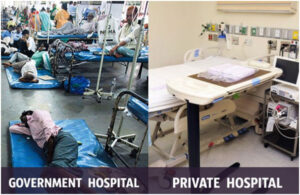
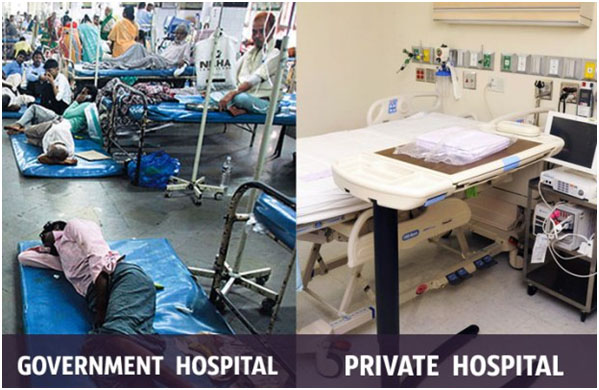
- Basic infrastructure may include shared wards, limited private rooms, and minimal luxury facilities.
- ICU and emergency departments are often functional but may be overcrowded.
Private Hospitals:
- Well-maintained infrastructure with private rooms, VIP suites, and modern amenities.
- Advanced ICU, operation theatres, and specialized departments.
- Focus on comfort, cleanliness, and patient convenience.
4. Waiting Time
Government Hospitals:
- Longer waiting times for consultations, elective surgeries, and diagnostic tests.
- High patient load leads to delays, especially in metropolitan areas.
Private Hospitals:
- Significantly shorter waiting times for appointments, diagnostic tests, and surgeries.
- Emergency services are generally faster and more efficient.
5. Staff & Expertise
Government Hospitals:
- Doctors and nurses are usually highly qualified and experienced, but may be overworked.
- Residents and interns often assist with treatment under supervision.
Private Hospitals:
- Experienced specialists and consultants are available for various specialties.
- Staff-to-patient ratio is higher, ensuring better personalized attention.
6. Accessibility
Government Hospitals:
- Located across urban and rural areas to provide healthcare to all sections of society.
- Free or subsidized treatment makes them accessible to lower-income groups.
Private Hospitals:
- Mostly concentrated in urban centers and metro cities.
- Accessibility is limited for rural populations due to cost and location.
7. Technology & Innovation
Government Hospitals:
- Focused on essential healthcare services; advanced technology may be limited due to budget constraints.
- Research facilities exist in top government hospitals and medical colleges.
Private Hospitals:
- Equipped with the latest technology, robotic surgeries, modern diagnostic tools, and telemedicine services.
- Often pioneers in adopting innovative treatments and procedures.
8. Patient Experience
Government Hospitals:
- Functional but less focused on luxury or comfort.
- Patients may need to navigate long queues, shared wards, and limited amenities.
Private Hospitals:
- Prioritize patient comfort, cleanliness, and hospitality.
- Additional services include diet counseling, personal attendants, and concierge facilities.
Conclusion
Both government and private hospitals have their unique strengths:
| Aspect | Government Hospitals | Private Hospitals |
|---|---|---|
| Cost | Low or free | Expensive |
| Quality of Care | Basic to advanced | High-end, personalized |
| Infrastructure | Basic, crowded | Modern, luxurious |
| Waiting Time | Long | Short |
| Staff & Expertise | Qualified but overworked | Highly experienced and available |
| Accessibility | Widespread, rural & urban | Mostly urban |
| Technology | Limited, varies | Advanced, innovative |
| Patient Experience | Functional | Comfort-focused |
Recommendation:
- Choose government hospitals for essential care, emergencies, or if budget is limited.
- Opt for private hospitals when seeking specialized treatment, advanced technology, shorter waiting times, or premium patient experience.